


Bases/ Stations
RCAF Station Sept-Iles, Quebec
RCAF Station/ CFB Shearwater, Nova Scotia
HMCS Shearwater

Special badges
LVG


1 February 1968. Integrated in the Canadian Armed Forces. Renamed CFB Shearwater.
Coin
 |
 |
| Front | Back |




SAC

1993. Renamed 12 Wing.


LVG






Arid

Op Transform Fun Meter

Recycle Reduce Reuse

LVG

Seaking Name Tags




LVG


Arid


LVG

CH-148 Cyclone
Project Management Office Maritime Helicopter Project (PMO MHP)


LVG


Arid


Combined Test Force (CTF)


LVG


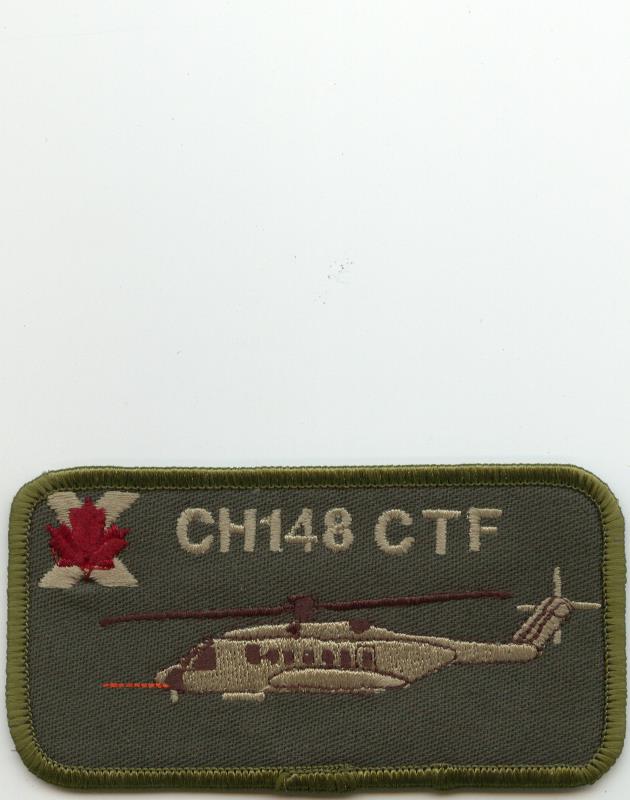


Arid


Weapon System Management

Sikorsky


Sea Trials 2015


LVG


Arid

12 Wing Operations


LVG


Tactical Electronic Warfare Instructor (TEWIC)


Arid


Prince William visit to 12 Wing 2011
Books
Title From White-Caps to Contrails A History of Modern Air Formation

1 CAD Maritime Helicopter Standardization and Evaluation Team


12 Air Maintenance Squadron




LVG

Special Project for the V-22 Canada/USA


LVG
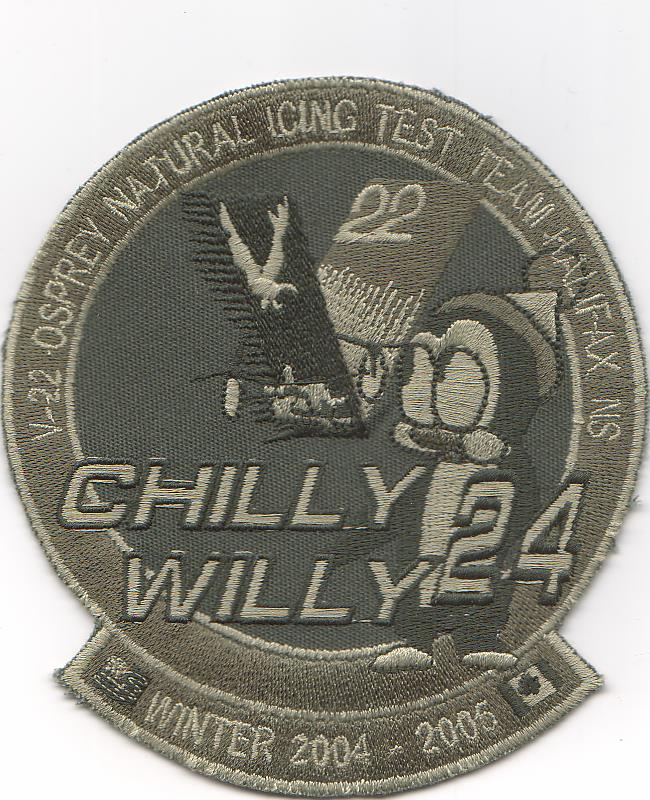

General Dynamics



HOTEF (Helicopter Operational Test and Evaluation Facility)




LVG




Arid


Slip-On


CH-148


LVG


Arid

MHP (Maritime Helicopter Project)
LVG
TAG AMO
Arid
AVS
Shearwater Flying Club


Shearwater International Airshow


Book Spectacle Aerien Shearwater International Air Show
Author None
ISBN None

Shearwater Aviation Museum

Military Police

RCAF Station Shelburne, Nova Scotia
June 1942. Opened directly south of HMCS Shelburne, originally for the U.S. Army Air Force. The Americans decided against occupying the station, and it instead became a Detachment of No. 3 Operational Training Unit.
No. 116 (BR) Squadron began training at the station.
June 1943. Squadron returned to their original home base at Botwood, Nfld.
For much of the rest of 1943, the station only saw occasional usage by No. 117 (BR) Squadron and No. 6 Coast Artillery Co-operation Detachment.
March 1944. The station was taken over by the Royal Canadian Navy, but later closed.


Shephard Bay, NWT

Sherbrooke, Quebec
December 1950. Location of No. 2450 Aircraft Control and Warning.
December 1961. Closure.
Location of 714e Escadron de Communication
Work Dress
Combat
Pin

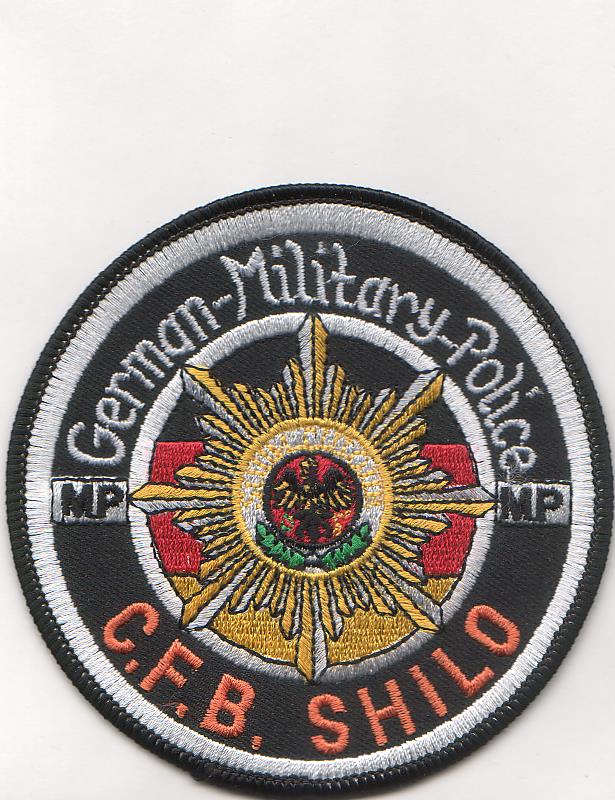
Shilo




LVG


Skipton-on-Swale, United Kingdom
January 1943. Location of Station HQ.
November 1945.
RCAF Detachment Smith River, British Columbia
April 1945. Opened.
July 1956. Closure.
RCAF Detachment Snag, Yukon
January 1945. Opened.
May 1956. Closure.
Spider Island, British Columbia
November1942. Location of No. 10 Radio Detachment.
August 1945. Closure.
Spotted Island, Labrador
November 1943. Location of No. 36 Radio Detachment.
November 1944. Closure.
RCAF Station Sioux Lookout, Ontario
Pinetree Line
1952. Opened as Sioux Lookout Air Force Station of the United States Air Force.
Early 1960's. Transferred to the RCAF's, home of No. 39 Aircraft Control & Warning Squadron. Re-named RCAF Station Sioux Lookout.
1 February 1968. Integrated in the Canadian Armed Forces becoming CFS Sioux Lookout.

Title CFS Sioux Lookout
Author P. A. Humby
ISBN None

Coin
|
|
|
| Front | Back |

1987. Closed.
RCAF Station Smithers, British Columbia
April 1944. Location of No. 17 Staging Unit.
July 1945. Closure.
Soest, Germany. Canadian Army


RCAF Station Souris, Manitoba
January 1943. Location of No. 17 Service Flying Training School.

May 1945. Closure.
St. Andrews, New Brunswick
November 1944. Location of No. 8 Convalescent Hospital
August 1945. Closure.
RCAF Station St. Anthony, Newfoundland
Pinetree Line
1953. Opened as St. Anthony Air Force Station of the United States Air Force.
1968. Closure.
St. Brides, Newfoundland
November 1944. Location of No. 41 Radio Detachment.
September 1945. Closure.
RCAF Station St. Catherine's, Ontario
October 1940. Location of No. 9 Elementary Flying Training School.
July 1944. Closure.
RCAF Station St. Eugene, Quebec
October 1940. Location of No. 13 Elementary Flying Training School.
September 1945. Closure.
July 1945. Location of No. 502 Reserve Equipment Maintenance Unit.
August 1945. Closure.
St. Georges-de-la-Malbaie, Quebec
September 1942. Location of No. 25 Radio Detachment.
September 1945. Closure.
RCAF Station/ CFB St. Hubert, Quebec
1927. Opened as opened in 1927 as the St. Hubert Airport, it served as Montreal's primary airport before Dorval International opened.
April 1936. Location of No. 15 (E) Squadron.
November 1937. Closure.
December 1937. Location of No. 115 (F) Squadron.
December 1940. Closure.
April 1941. Location of No. 4A Manning Depot.
August 1941. Closure.
August 1941. Location of No. 115 (F), later (B.R.) Squadron.
August 1944. Closure.
1 September 1941. Taken over by the RCAF. Location of No. 13 Service Flying Training School under the British Commonwealth Air Training Plan.
February 1944. No. 10 Service Flying Training School. re-located to North Battleford, Saskatchewan and the station was re-designated RCAF Station Saint-Hubert.




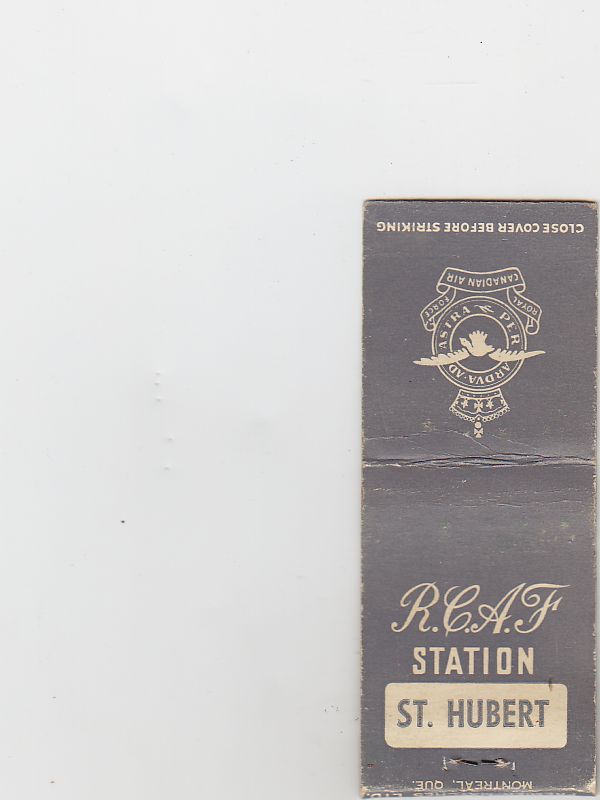
May 1946. Location of No. 9401 RCAF Detachment.
October 1946. Closure.
April 1946. 438 Squadron re-formed.
1950. Squadron added the title “City of Montreal” Squadron.
1981. Squadron converted to a tactical helicopter squadron.
September 1953. Location of No. 1 Overseas Ferry Unit.

August 1954. Closure
1 December 1948. 410 Squadron was formed at RCAF Station Saint-Hubert as a fighter squadron. The squadron later departed for 1 Wing in Marville, France to become part of No. 1 Air Division Europe.
1 March 1951. 441 Fighter Squadron re-formed.
13 February 1952. Squadron departed for 1 Wing in North Luffenham .
1 August 1952. 427 Fighter Squadron re-formed departing for 3 Wing Zweibrucken a year later.

1 March 1953. 444 Fighter Squadron, originally from RCAF Station Rivers re-formed,
27 August 1953. Squadron departed for 4 Wing Baden.


June 1955. Location of No. 5 Communications Unit.
December 1964. Closure.
June 1956. Location of No. 1 (F) Operational Training Unit.
May 1960. Closure.
December 1956. Location of No. 104 Composite Unit.
December 1964. Closure.
1 February 1957. 416 All-Weather Fighter Squadron re-located to Saint-Hubert from 2 Wing Grostenquin, moving again 4 years later to RCAF Station Bagotville.
June 1960. Location of Ground Observer Corps.
April 1964. Closure.
1966. No. 1 Transport Helicopter Platoon, a unit of the Royal Canadian Army Service Corps, re-located from RCAF Station Rivers.
1968. Renamed 450 (Heavy Transport) Helicopter Squadron moved to RCAF Station Uplands.
August 1994. Squadron, now a Tactical Helicopter Squadron, returned to Saint-Hubert from CFB Ottawa South (Uplands).
25 June 1996. Squadron disbanded.
21 June 1967. 429 (Tactical Transport) Squadron formed. Equipped with Buffalo aircraft, the squadrons roles included operational ground and aircrew training, transport, airborne support for the army and search and rescue (SAR) duties. A detachment of 429 Squadron was posted to RCAF Station Namao to support the army.
1990. Squadron relocated to CFB Trenton.


1 February 1968. Integrated in the Canadian Armed Forces becoming CFB St. Hubert.
Coin
|
|
|
| Front | Back |
In later years, Saint-Hubert would become the home of Mobile Command Headquarters and 10 Tactical Air Group (10 TAG).
1 September 1969. The base was downgraded to a detachment of CFB Montreal.


1987. Location of 1 Tactical Aviation Support Squadrons (TASS)


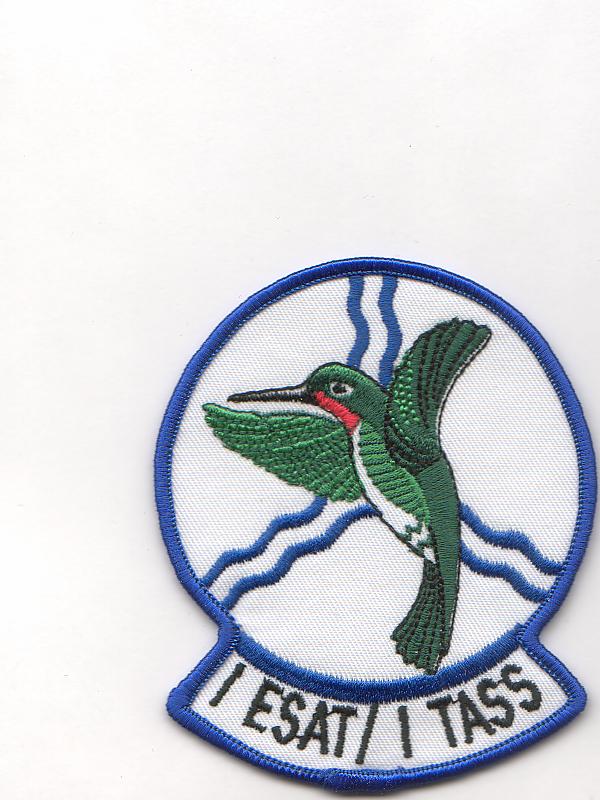

Combat Title


1996. Disbanded.
A small section of the former base next to the airfield was severed off and still functions as a military establishment. Designated as a part of No. 5 Area Support Group, the facility is now known as Saint-Hubert Garrison. Units occupy some of the old hangers at St Hubert Garrison include 438 Tactical Helicopter Squadron (a combined Reserve-Regular Force Squadron), 51 Service Battalion and 2 cadet units, 643 Royal Canadian Air Cadets Squadron and 2623 Royal Canadian Army Cadet Corps.
1989. Establishment of the Canadian Space Agency (CSA)


1993. The introduction of the Wing concept at Air Force establishments resulted in the base being designated 1 Wing, although this would be short-lived as I Wing later re-located to CFB Kingston.

RCAF Station/ CFB St. Jean, Quebec
7 July 1941. Location of No. 9 Air Observer School under the British Commonwealth Air Training Plan. The site was later re-designated RCAF Station Saint-Jean.


30 April 1945. Closure. The station remained open as part of the post-war RCAF. The station became the home of College Militaire Royal de Saint-Jean, as well as the Canadian Forces Technical, Recruit, Language and Management Schools.
April 1945. Location of No. 8 Surplus Equipment Holding.
March 1946. Closure.


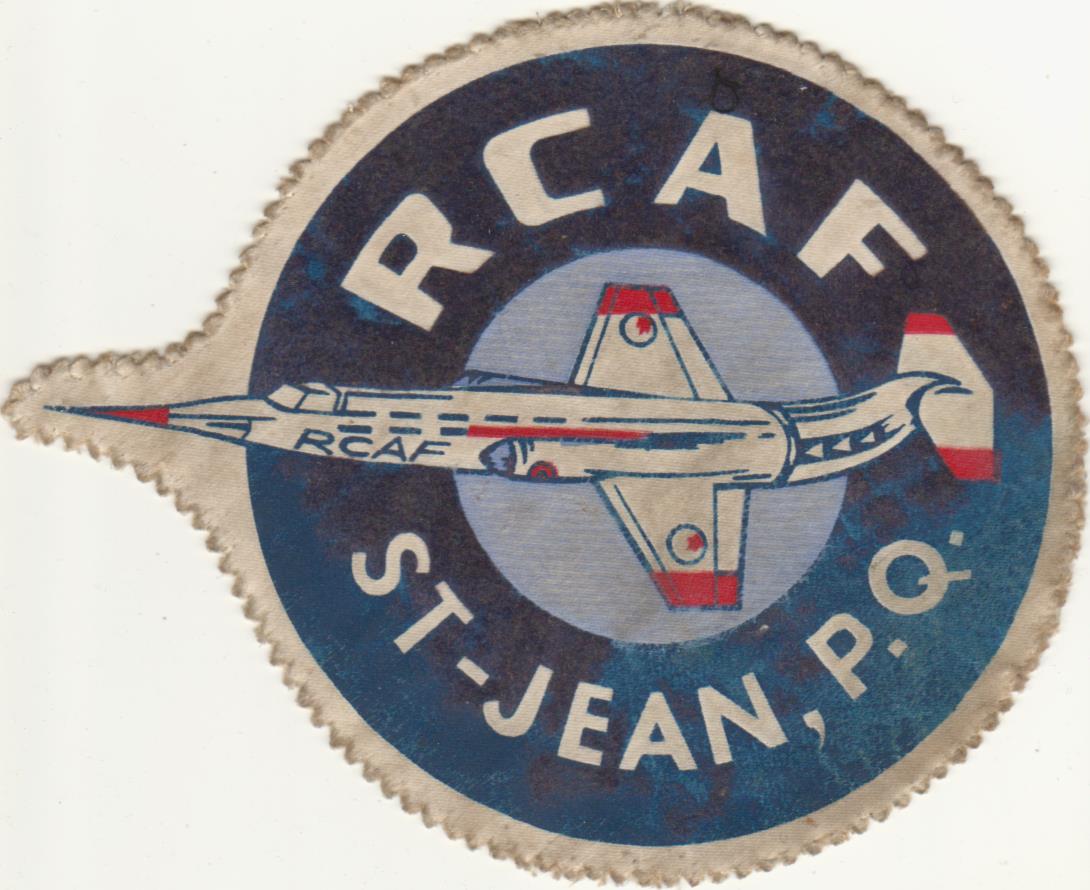


Matchbook

1 February 1968. Integrated in the Canadian Armed Forces becoming CFB St-Jean.
Coin
|
|
|
| Front | Back |
Location of 715 Communication Squadron
Pin


April 1969. L’Ecole Technique des Forces Canadiennes (CF Technical School) was formed for technical instruction.


1 April 1993. Location of 16 Wing.
1994. Relocated to CFB Borden, where it remains
today and responsibility for the station was transferred to Land Forces Command.

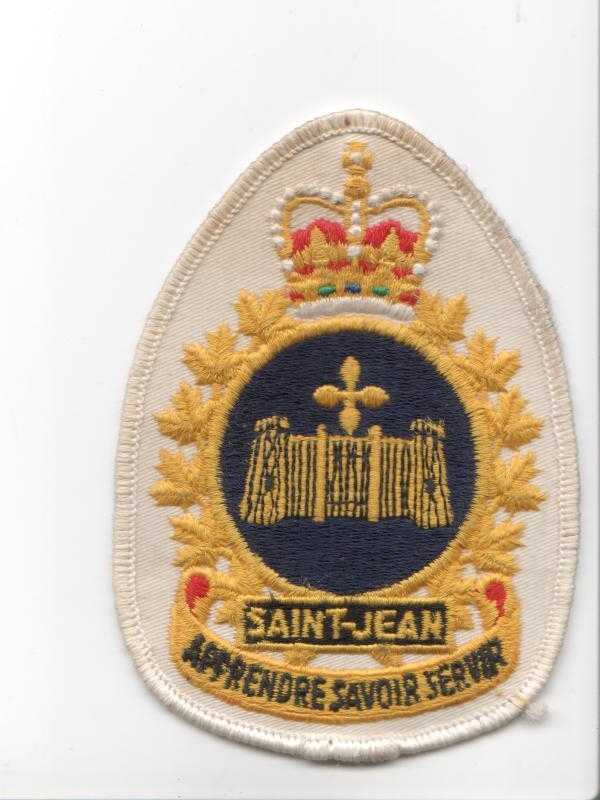


1996. More change was in the wind for CFB St-Jean. DND budget reductions resulted in the closure of 2 of Canada’s 3 military colleges, with Le College Militaire Royal being one of them. The Canadian Forces Technical School moved to CFB Borden and CFB Kingston and L’ Ecole Technique des Forces Canadiennes relocated to various locations. CFB Saint-Jean was downsized and ceased to exist as an autonomous base when No. 5 Area Support Group was established. The base was re-named St. Jean Garrison.
Senior Leaders Course

St. Jerome, Quebec
Location of No. 60 Ground Observer Corps.
Location of No. 62 Ground Observer Corps.
St. Johns, Newfoundland
December 1941. Location of No. 1 Port Transit Unit.
December 1946. Closure.
January 1944. Location of No. 23 Radio Detachment.
September 1944. Closure.
Pinetree Line (Red Cliff)
June 1954. Operational.
1 October 1961. Closure.
1950. Location of No. 4012 Medical Unit (Aux).
1953. Closure.
1 May 1951. Established as a Naval Shore Station, His Majesty’s Canadian Ship Avalon at Buchmaster’s Field. The station served as the shore establishment for the Flag officer of St. John’s from 31 May 1951 until 31 July 1955.
10 December 1962. Establishment moved to the former United States Navy base at Pepperrell, remaining at this location until closing completely in April 1964.
June 1953. Location of No. 8 Ground Observer Corps.
December 1954. Closure.
June 1964. Location of No. 7 Communications Unit.
December 1964. Closure.


1968. The site lay dormant, when it re-opened as CFS St John’s.

CFS St. John’s is an operational support base, housing 15 lodger units including 728 Communications Squadron, HMCS AVALON Sea Cadet Summer Training Centre and a detachment of the Canadian Forces Naval Engineering School.
Location of 728 Communication Squadron
Work Dress

Combat


Military Aeronautical Communications System (MACS)


St John, New Brunswick
Location of 722 Communication Squadron
Work Dress
Combat

RCAF Station St. Margarets, New Brunswick
Pinetree Line
1952. Opened as RCAF Station St Margaret’s, home of No. 2 Aircraft Control & Warning Unit (AC&W), which replaced the disbanded 2 ADCC from RCAF Station Chatham.
6 October 1988. Re-located to 22 Wing North Bay and re-designated as 21 Aerospace Control & Warning Squadron.
1953. RCAF Station St Margaret’s became part of the newly formed Pinetree Line, a network of radar stations established as an early warning detection system against a Soviet air attack.


1 February 1968. Integrated in the Canadian Armed Forces becoming became a Detachment of CFB Chatham.

Coin
|
|
|
| Front | Back |
1 April 1988. Closed.
St. Paul's Island, Nova Scotia
October 1944. Location of No. 76 Radio Detachment.
June 1945. Closure.
RCAF Station St. Sylvestre, Quebec
Pinetree Line
September 1953. Opened as RCAF Station Ste.-Marie, with the radar functions being run by No. 206 RCAF Radio Station.
The radar unit was later re-named No. 13 Aircraft Control & Warning Squadron.
The station itself was re-named RCAF Station St.-Sylvestre.
1 February 1968. Integrated in the Canadian Armed Forces becoming became CFS ST. Sylvestre.
Coin
|
|
|
| Front | Back |
1974. Closure.
RCAF Station St. Thomas, Ontario
April 1937. Location of Equipment and Accounting Training School.
May 1942. Closure.
1939. Location of No. 1 Technical Training School.
April 1945. Closure.
May 1945. Location of RCAF Hospital.
August 1945. Closure.
RCAF Station Stanley, Nova Scotia
March 1941 Location of No. 17 Elementary Flying Training School.
January 1944. Closure.
January 1944. Location of No. 2 Aircraft Storage Unit.
March 1945. Closure.
RCAF Station Stephenville, Newfoundland
Pinetree Line
1953. Operational.
1971. Closure.
RCAF Station Stoney Mountain, Alberta
Mid-Canada Line
December 1958. Opened.
December 1963. Closure.
RCAF Detachment Suffield, Alberta
July 1941.
May 1952.
Suffield, Alberta
April 1943. Location of RCAF Training Section.
April 1944. Closure.
June 1952. Location of Central Experimental and Proving Establishment.
December 1957. Closure.


Defence Research and Development Canada


RCAF Station/ CFB Summerside, Prince Edward Island
January 1941. Location of No. 9 Service Flying Training School, a flight school founded under the British Commonwealth Air Training Plan. Two relief landing sites were also established at the same time as No. 9 Service Flying Training School, and one in Wellington, PEI and the other one at Mount Pleasant, PEI, although it was later became the site of No 10 B&G School.
July 1942. No. 9 Service Flying Training School stay at Summerside would be short lived as it moved to RCAF Station Centralia.
July 1942. No. 1 General Reconnaissance School replaced No. 9 Service Flying Training School.


February 1945. No. 1 General Reconnaissance School was re-designated No. 1 Reconnaissance and Navigation School.

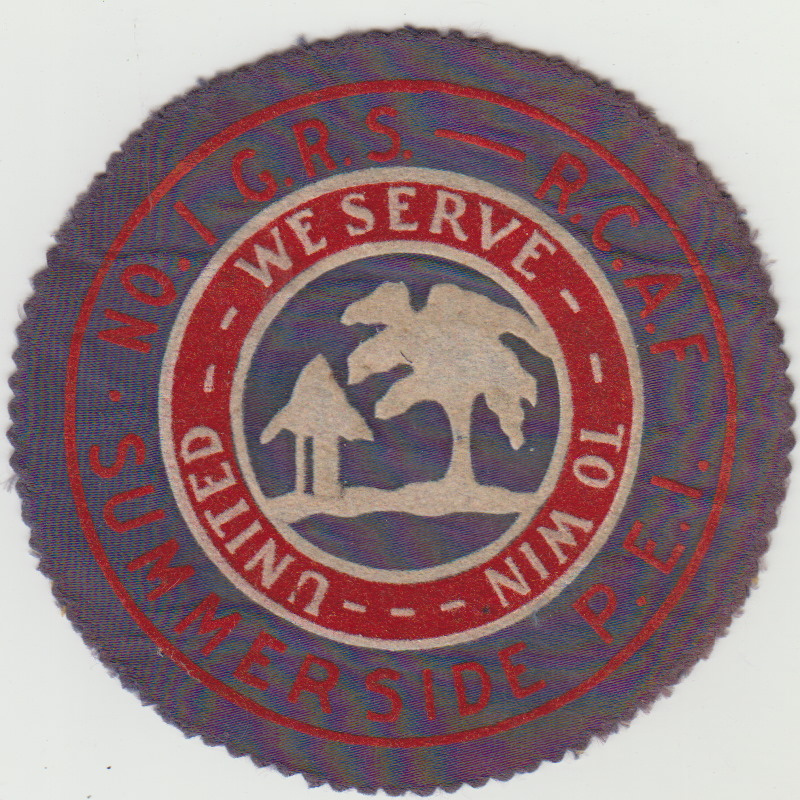
December 1950. Closure.
1946. Station closed.


April 1947. RCAF Station Summerside was re-activated as part of the post-war RCAF. No. 1 Air Navigation School (No. 1 ANS) was established at the station a NATO training facility.


1953. When No. 1 Air Navigation School left Summerside for RCAF Station Winnipeg, the Central Navigation School, which had been disbanded at RCAF Station Rivers in 1945, was re-activated at Summerside. This new school remained at Summerside for a year, before following No. 1 ANS to Winnipeg.
1949. Permanent Married Quarters were built.
December 1949. Location of No. 2 (Maritime) Operational Training Unit.
November 1960. Closure.
Over the years Summerside would also be the home of 880 Maritime Reconnaissance Squadron, 413 Transport and Rescue Squadron, 31 Support Air Group (Royal Canadian Navy), 429 Maritime Patrol Squadron 2 (M) OTU designation when performing non-training operational duties) and 420 Air Reserve Squadron.
1991. 880 Maritime Reconnaissance Squadron disbanded.
1991. 420 Air Reserve Squadron re-located to CFB Shearwater.
1991. 413 Search & Rescue Squadron moved to CFB Greenwood.

1959. The Maritime Proving and Evaluation Unit (MP & EU) opened at RCAF Station Summerside. The unit's function was to develop and test equipment and procedures used by Maritime Air Command.
1 May 1961. The Royal Canadian Navy re-activated 415 Maritime Patrol Squadron at Summerside, an anti-submarine aircraft squadron and equipped it with the CP-107 Argus Aircraft.


1 February 1968. Integrated in the Canadian Armed Forces becoming CFB Summerside, and control was transferred to the newly created Maritime Command.
Coin
|
|
|
| Front | Back |


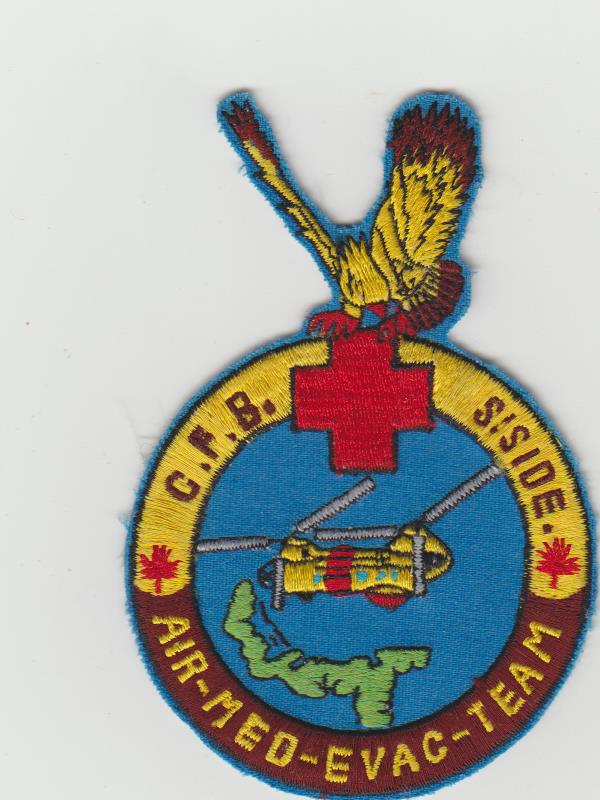


1968. 2 (M) OTU had departed for CFB Greenwood switching places with Greenwood’s No. 103 Rescue Unit, as did 415 Squadron in 1981, changing their fleet of Argus aircraft for the Aurora
1978. MP & EU also moved to CFB Greenwood.
1981. 415 Squadron, changing their fleet of Argus aircraft for the Aurora.
By the 1980's, the Summerside's primary role was surveillance support for
Fisheries and Oceans Canada. The remaining squadrons, the Tracker Squadrons 880
SAR Squadron and 420 Air Reserve Squadron, were tasked to conduct routine
fisheries patrols. However, the Tracker Aircraft had long since exceeded their
life spans and the Federal Government elected not to replace them.
1991. Closure of Base.
RCAF Station Swift Current, Saskatchewan
May 1941. Location of No. 32 Elementary Flying Training School (RAF).
September 1944. Closure.
December 1941. Location of No. 39 Service Flying Training School (RAF).
May 1944. Closure.
March 1944. Location of No. 401 Holding Unit.
May 1944. Closure.
August 1944. Location of No. 407 Equipment Holding Unit.
November 1944. Closure.
May 1945. Location of No. 3 Surplus Equipment Holding Unit.
April 1946. Closure.
RCAF Station Sydney, Nova Scotia
Pinetree Line
September 1940. Established during World War II as RCAF Station Sydney. After the war ended, the Station was closed and only a small caretaker staff remained on site.
June 1942. Location of No. 128 (F) Squadron.
March 1945. Closure.
March 1943. Location of No. 4 Coastal Artillery Co-Operation Flight.
October 1943. Closure.
October 1943. Location of No. 20 Radio Detachment.
June 1945. Closure.
15 March 1953. A second RCAF Station Sydney opened as part of the Pinetree Line of radar station , with the radar functions being run by No. 221 Aircraft Control & Warning Squadron.

1 February 1968. Integrated in the Canadian Armed Forces becoming CFS Sydney.
Coin
|
|
|
| Front | Back |


1993. Closed.
RCAF Station Terrace, British Columbia
April 1944. Location of No. 18 Staging Unit.
August 19454. Closure.
RCAF Detachment Teslin, Yukon
January 1945. Opened.

May 1955. Closure.
Tholthorpe, United Kingdom
June 1943. Location of Station HQ.
December 1945. Closure.
Thunder Bay, Ontario
Location of 736 Communication Squadron
Work Dress
Combat

Tignish, Nova Scotia
October 1943. Location of No. 24 Radio Detachment.
September 1945. Closure.
RCAF Station Tofino, British Columbia
Pinetree Line
October 1942. Opened.
November 1957. Closure.
October 1945. Location of No. 1 Advance Tactical Training Base.
November 1945. Location of Signals Unit.
August 1946. Closure.
June 1946. Location of Care and Maintenance Unit.
August 1946. Closure.
Topcliffe, United Kingdom
June 1941. Location of No. 3 Personnel Reception Centre.
July 1946. Closure.
December 1942. Location of No. 1659 Conversion Unit.
December 1943. Closure.
January 1943. Location of Station HQ.
January 1944. Closure.
April 1943. Location of No. 61 Base HQ.
October 1944. Closure.
November 1944. Location of No. 76 Base HQ.
August 1945. Closure.
February 1946. Location of Personnel Depot.
July 1946.
RCAF Station Torbay, Newfoundland
15 December 1941. Location of No. 11 Bomber Reconnaissance (BR) Squadron.
April 1942. Location of No. 5 Coastal Artillery Co-Operation Flight.
July 1943. Closure.
June 1942. Location of No. 145 (BR) Squadron.
June 1945. Closure.
June 1943. Location of No. 20 Sub-Equipment Depot.
April 1945. Closure.
August 1943. Location of No. 1 Composite Detachment
June 1945. Closure.
September 1943. Location of No. 14 Radio Detachment.
October 1945. Closure.
September 1943. Location of No. 17 Radio Detachment.
September 1944. Closure.
January 1944. Location of No. 5 Communication Flight.
August 1944. Closure.
May 1945. Location of No. 2 Radio Wave Propagation Unit.
March 1946. Closure.
April 1947. Location of No. 103 Rescue Unit.
May 1959. Closure.

July 1954. Location of No. 107 Rescue Unit.
May 1959. Closure.
Other units occupying RCAF Station Torbay at various times during WW II were No. 125 Bomber Squadron, No. 145 (BR) Squadron, No. 128 (Fighter) Squadron and No. 5, No. 113 (BR) & No. 160 (BR) Squadrons The Royal Air Force and the United States Army Air Corps also maintained detachments at the station until December 1946.


1 April 1956. Closed.
15 April 1953. Re-activated.


LVG

1963. Closed. The former station is now the St. John's Airport.
Houghton Gruen Torquay, United Kingdom
September 1942. Location of "R" Depot.
February 1946. Closure.
RCAF Station Toronto, Ontario
5 October 1932. Location of No. 10 (Army Co-operation) Squadron (Auxiliary).
March 1938. Location of No. 12 Aeronautical Inspection District.
September 1946. Closure.
World War II. Opened as a military laboratory. Administrative offices and barracks were constructed to house the school. Post-war, the school became a Detachment of the newly established RCAF Station Toronto (Downsview).
September 1940. Location of No. 1 Equipment Supply Depot.
Location of No. 1 Training Command

October 1941. Location of Canadian Women's Auxiliary Air Force Training Depot.
March 1942. Re-designated No. 6 M Depot.
October 1941. Location of and No. 6 Initial Training School.
May 1944. Closure.
December 1942. Location of No. 2 Composite Training School (WD).
July 1943. Location of No. 1 Construction and Maintenance Unit.
July 1948. Closure.
July 1944. Location of No. 1 Command Medical Board.
August 1945. Closure.
November 1944. Location of No. 4 Release Center.
March 1946. Closure.
November 1944. Location of No. 11 Pre-Aircrew Training School.
1946. The Headquarters unit of 400 RCAF (Auxiliary) Squadron was formed at the Avenue Road Detachment.
March 1946. Location of No. 1 Manning Depot relocated from Portage La Prairie. Was located at the Toronto Exhibition Grounds
March 1947. Closure.
May 1946. Location of No. 9400 Detachment, ITKS.
January 1947. Closure.
January 1948. Location of Officers Selection Unit.
November 1949. Closure.
June 1950. Location of No. 2 Radar and Communications Unit (Aux).
November 1952. Closure.
May 1951. Location of No. 2 Group Headquarters (Reserve).
May 1954. Closure.
June 1951. Location of No. 2400 Aircraft Control and Warning.
May 1960. Closure.
September 1951. Location of No. 5001 Intelligence Unit.
November 1957. Closure.
July 1952. Location of No. 3000 Technical Training Unit.
December 1963. Closure.
January 1953. Location of No. 14 Operational Wing Wing (Aux).
December 1964. Closure.
January 1953. Location of No. 4005 Medical Unit (Aux).
1964. Closure.
January 1968. Location of Institute of Aviation Medicine.
December 1964. Closure of No. 1 Equipment Supply Depot. and Institute of Aviation Medicine.

1964. The Headquarters unit of 400 RCAF (Auxiliary) Squadron remained until when it moved to RCAF Station Downsview to join the flying section of the squadron.


Air Reserve

Minor Baseball

Also at the Avenue Road Detachment were the RCAF Personnel Applied Research Unit, part of the Aircrew Selection Unit at RCAF Station Downsview, the Flying Personnel Medical Establishment and the Institute of Aviation Medicine.
1982. The Canadian Forces Staff School moved to the Avenue Road Detachment.
Mid 80's. The Army’s Toronto District Headquarters, formed at Moss Park Armoury in 1970, moved to the Avenue Road Detachment, remaining until it again moved to Downsview in 1994.
1995. The Avenue Road Detachment closed, along with CFB Toronto.
Location of Defence and Civil Institute of Environmental Medicine


Location of 709 Communication Regiment
Work Dress

Combat


Defence and Civil Institute of Environmental Medicine (DCIEM)


Defense Research and Development Canada - Toronto Research Center -
Location of Canadian Forces College (CFCSC)

Continuing Education Officer Training Plan (CEOTP), located at Seneca College
LVG

Joint Task Force Central (JTFC)
LVG


Canadian International Air Show Aug 31, Sept 1,2 3 CNE

RCAF Station/ CFB Trenton, Ontario
10 May 1929. Construction began. Referred as Trenton Air Base at that time.
August 1931. Officially opened.
1936. Location of Air Armament School.
November 1951. Closure.
January 1936. Location of School of Army Co-Operation.
December 1941. Closure.
April 1937. Location of Equipment and Accounting Training School.
May 1942. Closure.
May 1937. Location of No. 1 Air Navigation School.
April 1942. Closure.
16 June 1937. 1 FTS (Flying Training School) arrived from Camp Borden, Ontario
19 January 1940. Moved back to Camp Borden, Ontario
December 1939. Location of No. 1 Initial Training School.
December 1944. Closure.
January 1940. F.I.S. (Flying Instructor Course) moved from Camp Borden, Ontario.
February 1940. Name changed to C.F.S. (Central Flying School).
April 1940. Location of Central Flying School.
August 1946. Closure.
March 1941. Location of No. 1 Composite Training School (CTS).
January 1948. Closure.
June 1941. Location of No. 6 Repair Depot.


December 1964. Closure of No. 6 Repair Depot.
September 1942. Location of No. 1 Reselection Center.
August 1943. Closure.
October 1942. Location of No. 1 Flying Instructor's School (F.I.S.).
January 1945. Closure.
1 April 1951. Reformed.

8 June 1959. Moved to Portage La Prairie, Manitoba
May 1944. No. 2 Manning Depot re-located from Brandon.

May 1949. Closure.
January 1945. Location of No. 102 Composite Unit.
December 1960. Closure.
18 September 1945. Location of No. 1 IFS (Instrument Flying School).
January 1949. Location of School of Service Management.
May 1949. Closure.
2 KTS (Composite Training School)


April 1951. 2 KTS (Composite Training School) moved to RCAF Aylmer
1 April 1951. Location of No. 1 F.I.S. (Flying Instructor School)
December 1952. Location of No. 2 Air Movements Unit.


December 1953. Location of No. 4 (Transport) Operational Training Unit.
December 1964. Closure.
September 1959. Location of Training Standards Establishment and School of Meteorology.
December 1964. Closure.
September 1959. Location of School of Meteorology.
December 1964. Closure.
January 1960. Location of School of Instructional Technique.
April 1962. Closure.
1964. Location of No. 4 Field Technical Training Unit.


Magazine

1 February 1968. Integrated in the Canadian Armed Forces. Renamed CFB Trenton.
Coin
|
|
|
| Front | Back |


Air to Air Refuelling Shop


Servicing ASO/HT Snags


Aircraft Refuelling Section

Air Force Training Centre


LVG

Basic Flight Engineer course
LVG


Base Supply
Base Transportation


Canadian Forces Professional Championship/ (CFPDC/CCPFC)
Heavy Equipment


Junior Ranks South Side


Mobile Repair Team


50th Anniversary


Title Trenton 50 Years of Air Force
Author None
ISBN None

Baseball/ Fastball






Car Rally

Fish and Game Club

Golf

Gymnastic

Hockey


Jogging


Lacrosse

Martial Arts Club and Karate Club


Skeet Club

Winter Carnival


Scouts

1993. Renamed 8 Wing.


LVG


Arid


Coin


Joint Nuclear, Biological and Chemical Defence

Aerospace Warfare Centre


coin


Canadian Forces Aircrew Selection Centre (CFASC)


Canadian Forces Parachute Maintenance Depot

Books
Title CFB RCAF Trenton 1931 1981 50th Anniversary Armed Forces Day 81
Author None
ISBN None

Title CFB Trenton 60th Anniversary
Author None
ISBN None


Title Quinte International Airshow
Author None
ISBN None

Magazine
Title Contact 40th Anniversary
Author None
ISBN None

C-17 Program
LVG

2 Air Movement Squadron
CADPAT
Air Force
Air Force Flying Suit


Arid
8 Air Communication and Control Squadron


LVG


ATCCU (Air Traffic Control and Command Unit)

Combat Title


8 Mission Support Squadron
LVG

Coin


8 Operations Support Squadron

LVG

ATCCU (Air Transportable Communication and Control Unit)


CADPAT Title
Air Force


Air Force Flying Suit

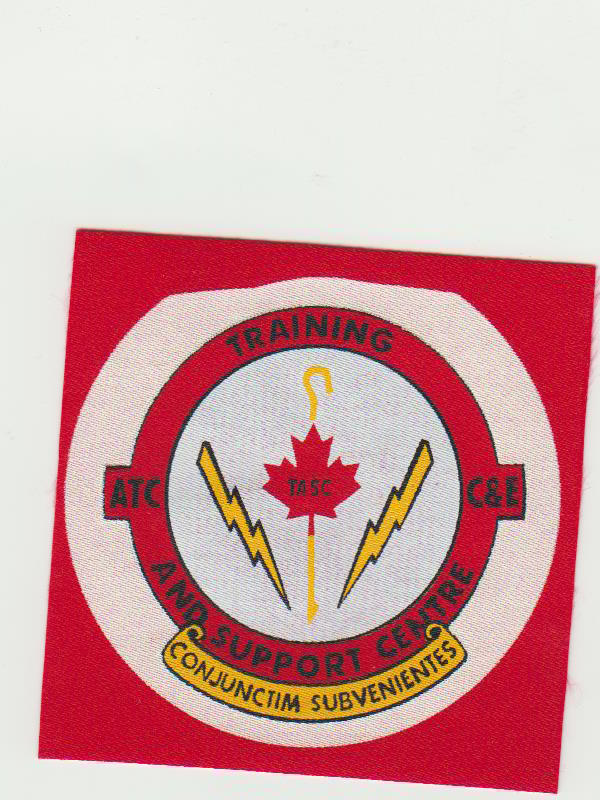
Training and Support Centre (TASC) (1973 to 1983)


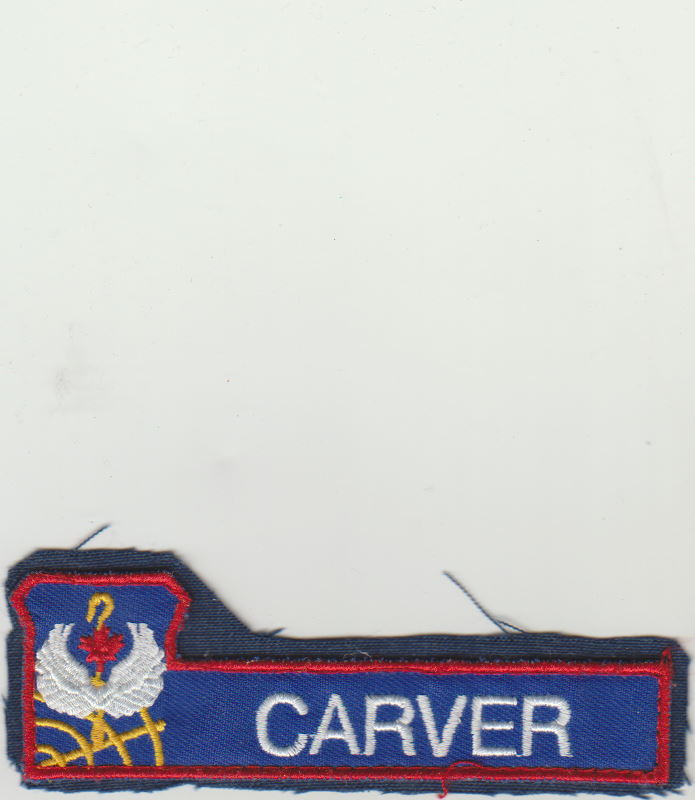
Terminal Radar and Control Systems Support and Training Unit (TRACS STU) (1983 to Present)


Military Aeronautical Communications System (MACS)


8 Air Maintenance Squadron (8 AMS)


LVG

8 Air Reserve Flight
8th Airfield Engineer Squadron (8 AES)
Combat

CADPAT
Air Force

Air Force Flying Suit

Arid

8 Wing Medical Squadron


LVG

Search and Rescue


LVG
coin


LVG

86 Airfield Systems and Utilities Unit


ATESS (Aerospace and Telecommunications Engineering Support Squadron)


LVG

AMDU


Aircraft Battle Damage Repair


Location of 708 Communication Squadron
Work Dress
Field Aviation (Civilians at AMDU)


Books
Title The History of 6RD and the Aerospace Maintenance Development Unit
Author None
ISBN 0-919783-96-1

Canadian Forces Postal Unit

Disaster Assistance Response Team (DART)


Quinte International Airshow


LVG

Title 1994 Quinte International Airshow
Author None
ISBN None

Air Cadets Camp


Cub


